
The Mission
The Resnik project was initiated in November 2016, driven by the ambition to design and launch its first homebuilt rocket, and marking a major milestone for Cosmic Research.
For the first time, the team integrated a self-developed solid rocket motor. This made Resnik not only a structural achievement, but also a key step toward propulsion independence.
The mission’s primary objective was to test a series of critical subsystems, all of which were designed and manufactured by the team. Resnik allowed us to validate concepts that would later evolve into more advanced systems.
The Legacy Behind the Name
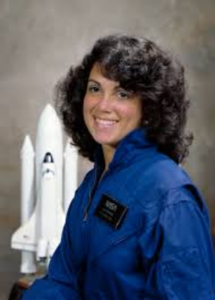
Every rocket developed by Cosmic Research carries a profound legacy in its name. The Resnik Mission is a direct tribute to Judith Resnik, the electrical engineer and NASA astronaut who tragically lost her life in the Space Shuttle Challenger disaster in 1986. Resnik was not just a NASA crew member; she represented a legacy of technical excellence, rigour, and the determination to overcome any barrier in such a demanding field—values that perfectly define our first in-house rocket.
The Rocket
2.2 m
ROCKET LENGTH
100 mm
OUTER DIAMETER
2.115 kg
LIFT-OFF WEIGHT
1930 m
APOGEE
Propulsion
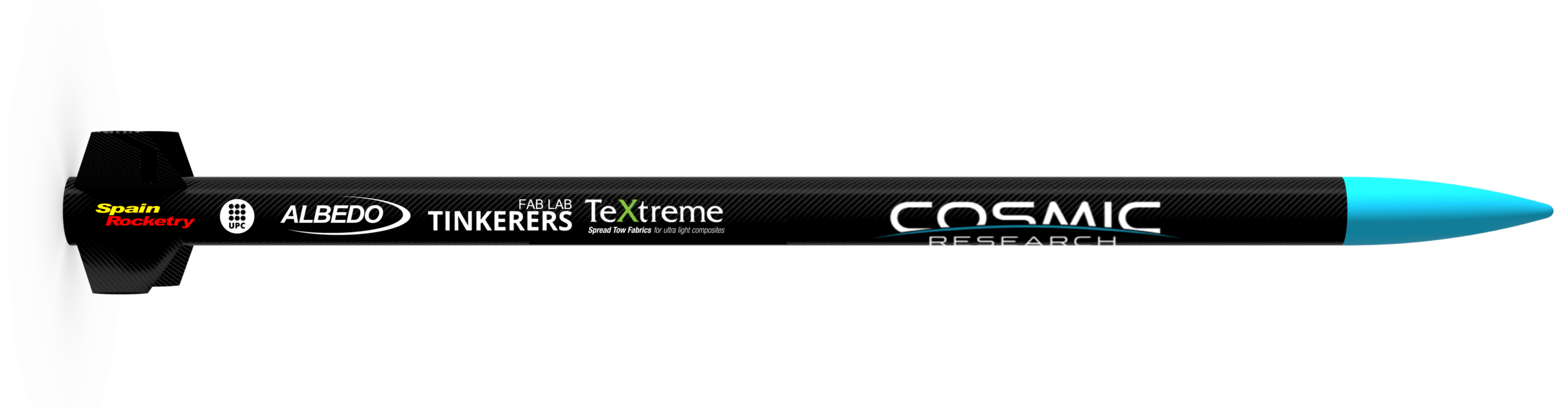
Resnik was powered by a K-class experimental solid motor, based on a mixture of epoxy and potassium nitrate.
Structures
The fuselage was built using two phenolic tubes, reinforced through a carbon fiber skinning process. This technique involves applying layers of epoxy and carbon fiber to significantly improve structural strength while achieving a smooth, polished surface that reduces aerodynamic drag. The nose cone was made of high-strength polyethylene.
Recovery
Resnik was designed with a dual-deployment recovery system:
- A drogue parachute deployed at apogee
- A main parachute deployed at 150 meters above the ground
The rocket separates into three sections (lower body, upper body, and nose cone) to ensure a safe and controlled descent.
Avionics
Resnik featured two electronic bays: one housing a custom-built onboard computer, and another containing a commercial altimeter.
The in-house computer records altitude, velocity, acceleration, rotation, and position. It is capable of detecting apogee and triggering parachute deployment, as well as identifying near-supersonic conditions to protect the rocket.
A bidirectional communication system enabled real-time data transmission to a ground station developed by the team. The rocket also carried an onboard HD camera.
Launch day
Launch Site: Alcolea de Cinca (Huesca, Spain)
The flight took place on March 11, 2017, coinciding with a launch day organized by Spain Rocketry. The weather was favorable: there were few clouds, little wind and the temperature stayed around 19 ºC. Moisture levels kept low during the day.
10 am: Rendez-vous with the rocketeers
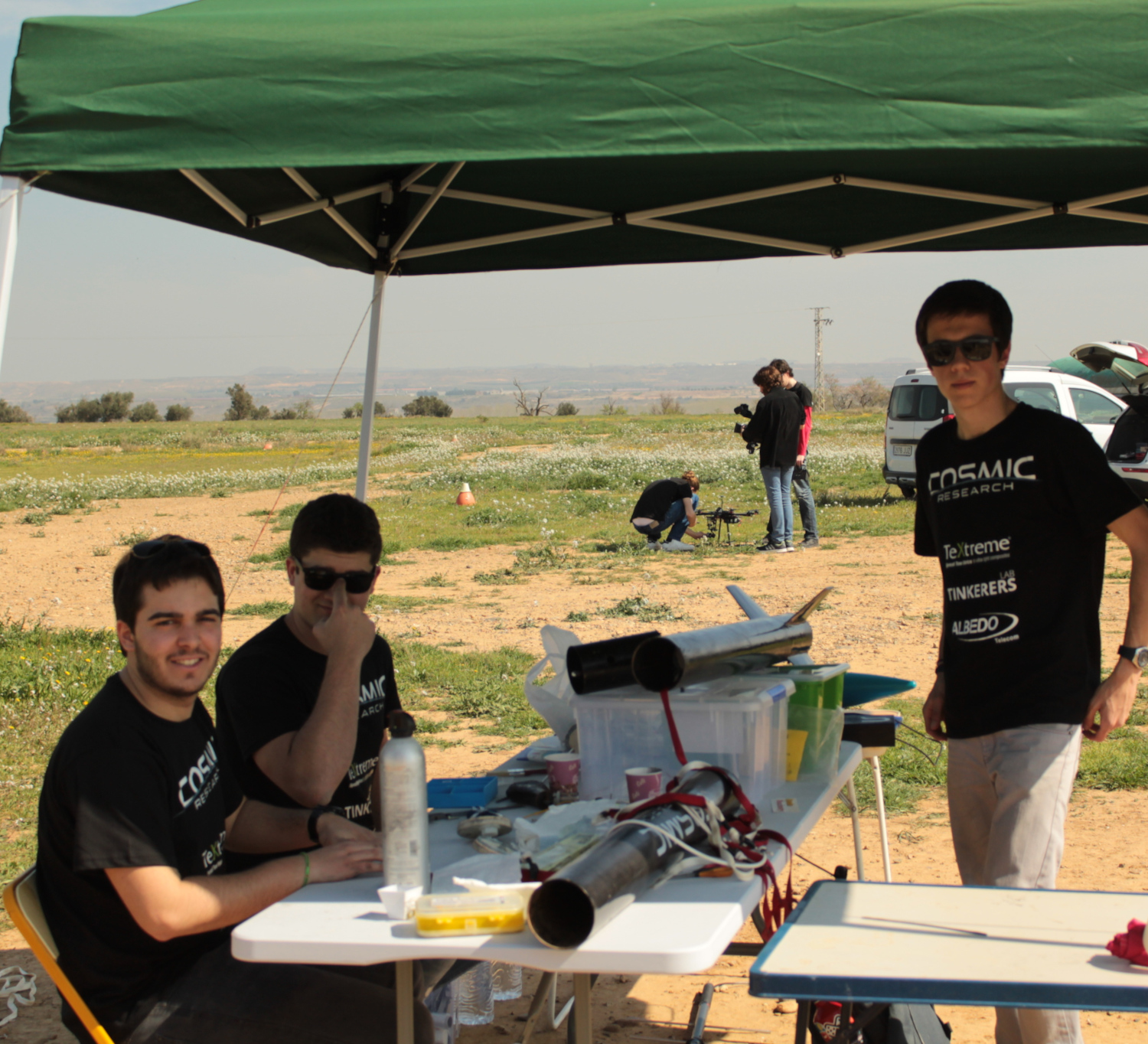
10.45 am: Launch setup ready: two launch pads, a launch console to control the ignition and various tents and chairs to provide shade and rest for the assistants.
11 am: The rocket was weighed and its center of mass was checked.
11.15 am: The rocket was carried in hand to the rail. It was carefully aligned and the ignitor was connected to the console cable. A quick electric continuity test was performed and green light was given to the launch.
11.30 am: The motor ignition was done remotely: initial burn was good and the rocket rapidly ascended in a straight path.
Sight of the rocket was lost at around 1 km, and regained when the rocket was 500-1000 m above the ground, not far from the launchpad.
According to the ground lectures, both drogue and main deployed correctly and landing occurred softly at around 500 meters from the launch pad.
The rocket was recovered by some members of the team and presented no significant damage. Launch setting was dismounted and launch day concluded.
Mission Collaborator

SpainRocketry is a Spanish amateur rocketry club that hosts and organizes launch campaigns under the framework of the international Tripoli Rocketry Association. Through its infrastructure and launch sites, the club supports hobbyists, research groups, and student teams in safely testing and flying high-power rockets, while promoting the development of rocketry in Spain. The Weber mission was launched during one of their organized campaigns at the Fuentelahiguera launch field.