Commercial Solid Rocket Motor
Cesaroni Pro29, with no onboard electronic control


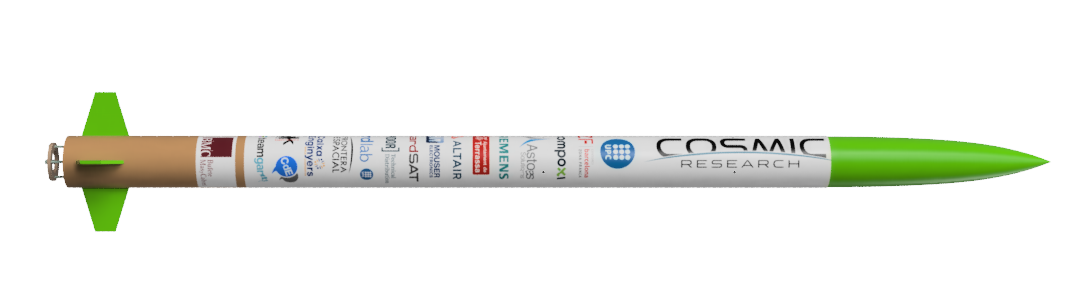
For the three versions, the deployment system is carried out using a motor delay ejection followed by the deployment of a single parachute, a solution widely used when no avionics are available and for small rockets.
Although Weber did not incorporate active flight control avionics, it carried a payload exclusively intended to obtain flight data, which constitutes its independent system.
It consists only of the MissileWorks RRC3 commercial avionics device that allows velocity and altitude data to be recorded throughout the flight. It is powered by a battery and switched on or off via a switch.
It is important to note that this system was used strictly for data acquisition and did not perform deployment control or flight actuation functions.
The Weber mission was launched from a newly established rocketry field in Fuentelahiguera de Albatages, Spain. This location operates under a formally approved AIP (Aeronautical Information Publication) notice registered with ENAIRE, enabling coordinated and regulated flight activity within controlled airspace.
The village is situated in the province of Guadalajara, within the autonomous community of Castilla-La Mancha, Spain.
The elevation of approximately 900 meters above sea level provides favorable atmospheric conditions for mid-power and high-power rocketry operations. The open terrain and rural surroundings make it a suitable environment for safe launch and recovery operations under controlled procedures.
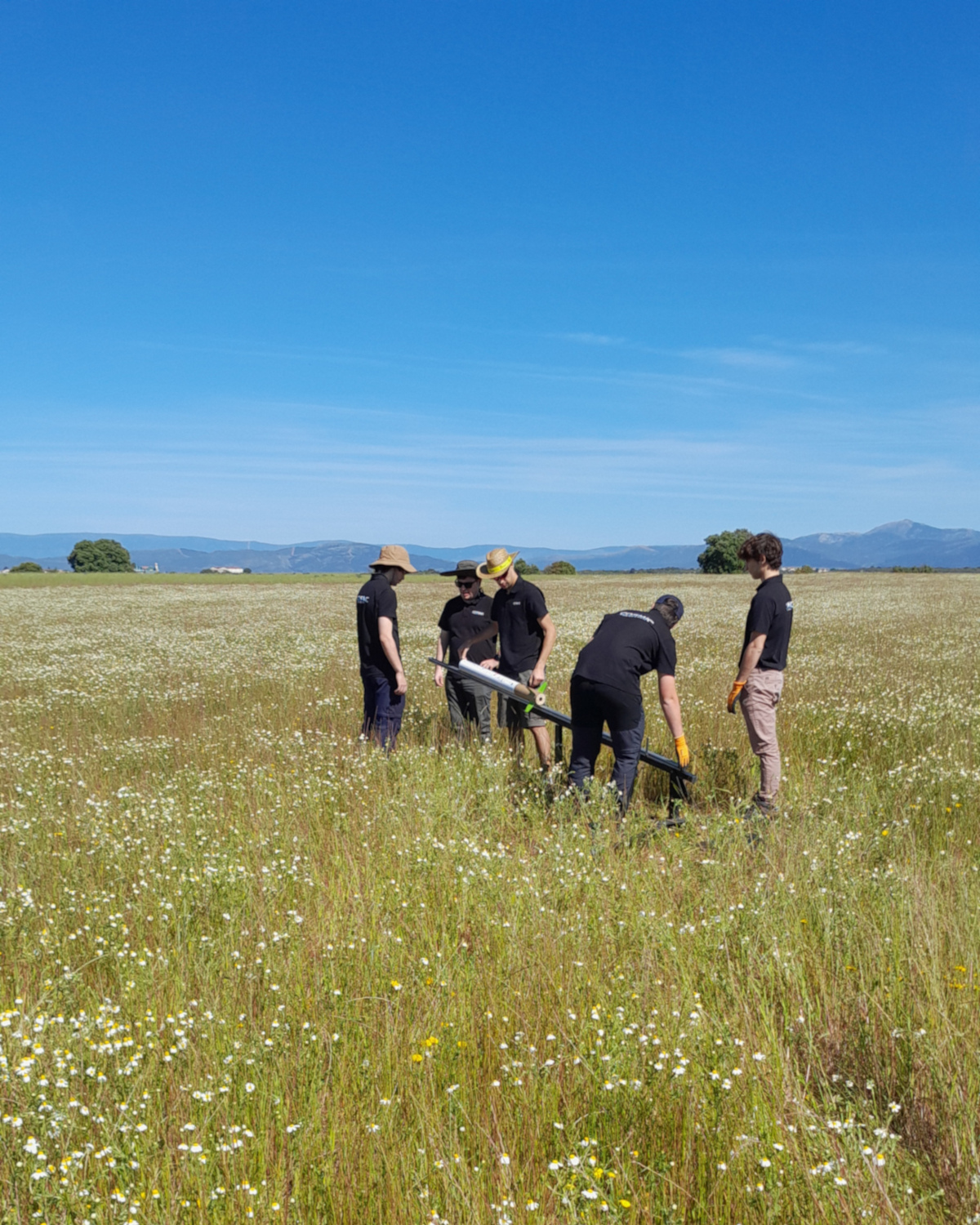

SpainRocketry is a Spanish amateur rocketry club that hosts and organizes launch campaigns under the framework of the international Tripoli Rocketry Association. Through its infrastructure and launch sites, the club supports hobbyists, research groups, and student teams in safely testing and flying high-power rockets, while promoting the development of rocketry in Spain. The Weber mission was launched during one of their organized campaigns at the Fuentelahiguera launch field.