
The Mission
Lucid mission aimed to launch a stratospheric rocket (+9 km) in order to settle the knowledge obtained with our previous missions, as far as demonstrate all the systems involved, as it is the first supersonic launch with self-made PCB avionics systems.
It has been developed by Cosmic Research with collaboration of Forat Engineering (student’s CanSat team) and Control de Misión (Spanish YouTuber).
Nowadays, Lucid is the first Spanish student-made rocket participating at the Spaceport America CUP, the world’s most prestigious student rocketry teams competition, and is the most complex mission developed at Cosmic Research. It was launched on June 20th, 2024 at the Spaceport America Vertical Launch Area.
The Legacy Behind the Name
Every rocket developed by Cosmic Research carries a profound legacy in its name. The Lucid mission is a direct tribute to Shannon Lucid, the NASA astronaut and biochemist renowned for her long-duration flight aboard the Mir space station. She represented a legacy of scientific dedication, resilience, and passion for exploration. These values perfectly mirror this historic milestone: Lucid became the first and only Spanish rocket to compete at the prestigious Spaceport America Cup, marking our international debut.
The Rocket

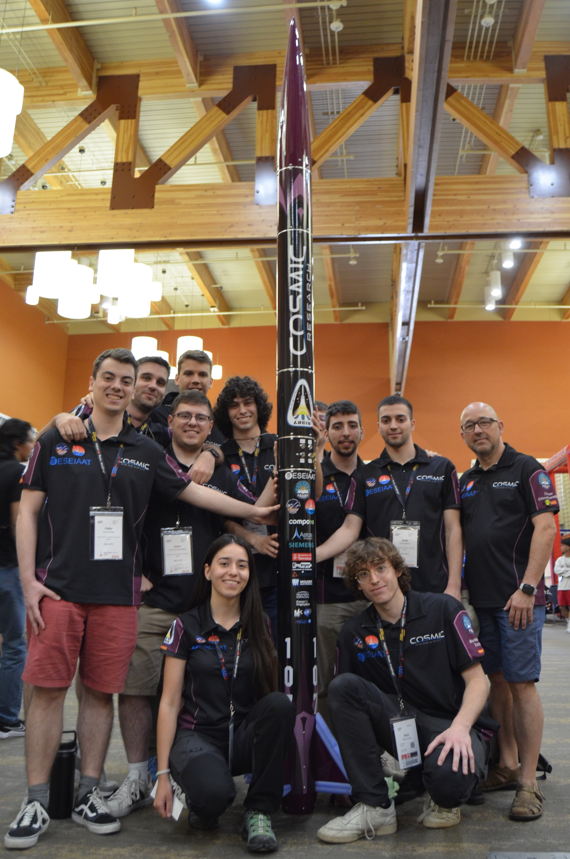
3.4 m
ROCKET LENGTH
157 mm
OUTER DIAMETER
37 kg
LIFT-OFF WEIGHT
22 g
MAX ACCELERATION
9 km
ESTIMATED APOGEE
915 MHz
ONE-WAY RADIOLINK
Propulsion
Lucid is propelled by the Cesaroni 20146N5800-P, also known as “the rocket killer”, a commercial solid rocket motor. With approximately 9 kg of propellant burned in 3.5 seconds, the simulations targeted around 9 km of apogee in less than a minute.
Structures
This rocket follows its predecessor Bondar design, with some changes made for the competition. The motor bay contains the propulsion system, the avionics bay which has been lowered in order to be manually-activated, the recovery module containing the parachutes and the payload module. All the rocket has a monocoque design made primarily in carbon and glass fibre, as far as some aerospace-grade aluminium alloys, which ensures a lightweight and strong design capable of withstanding the 22 g’s peak acceleration.
Avionics
The avionics involved is the first one developed at Cosmic Research for supersonic flights, with a single PCB design that is able to communicate to a self-made ground station at 915 MHz band. Other features include a self-made Kalman filter and a Flight Data Recorder system. Also, a commercially available avionics system has been incorporated for redundancy reasons and as per competition requirements.
Payload
This design can be highlighted due to their increased payload capabilities, being able to carry 4 kg of payload in a 3U cubesat form with different experiments. The payload itself comprises a self-made on board camera, an air pollution measurer from Forat Engineering and other private company projects.
Aerodynamics
With Cosmic Research’s 6 degree of freedom simulator Gladys, and using commercial tools to verify, the fin design has been optimized. Compared to Bondar, a lighter design with less fin surface fin area ensures that the competition’s stability requirements for the rocket are fulfilled.
The Spaceport America CUP
Being the worldwide and most prestigious rocketry competition for student teams, it is yearly celebrated at the Spaceport America since 2005. At its 17th edition, Cosmic Research granted the honour of being the 107th accepted team as the first Spanish student team ever at this competition.
Worldwide students of different universities have the opportunity to showcase their abilities from the most technical and precise designs to the most creative and innovative recordings of the flights and the event, with different categories where to participate.
Due to the first-time participation, strict rules limit the maximum launch category to 10,000 ft (3 km) height. However, due to the team’s expertise and previous launches, they allowed the team to compete directly at the top 30,000 ft (9 km) category, for commercial solid engines, where we had to be as close as possible to the target height and perform the safe launch and recovery.
Technical and Safety challenges
From even being selected for the competition, we faced different challenges: detailed designs of Lucid for the initial application, recurrent follow-ups, safety courses and how to bring the rocket across the Atlantic.
Our first challenge was prior to almost competing, as a full detailed design for the initial application was requested, which was evaluated to decide whether it was valid or not for the competition. Also, a set of other reports, follow-ups and compliance demonstrations were performed.
Another key aspect was the mandatory need of a Tipoli association member as a mentor, which has to have the highest certification. Special thanks for our mentor Brett Bachman which not only allowed us to be at the competition, but also gave us valuable feedback during the last development stages.
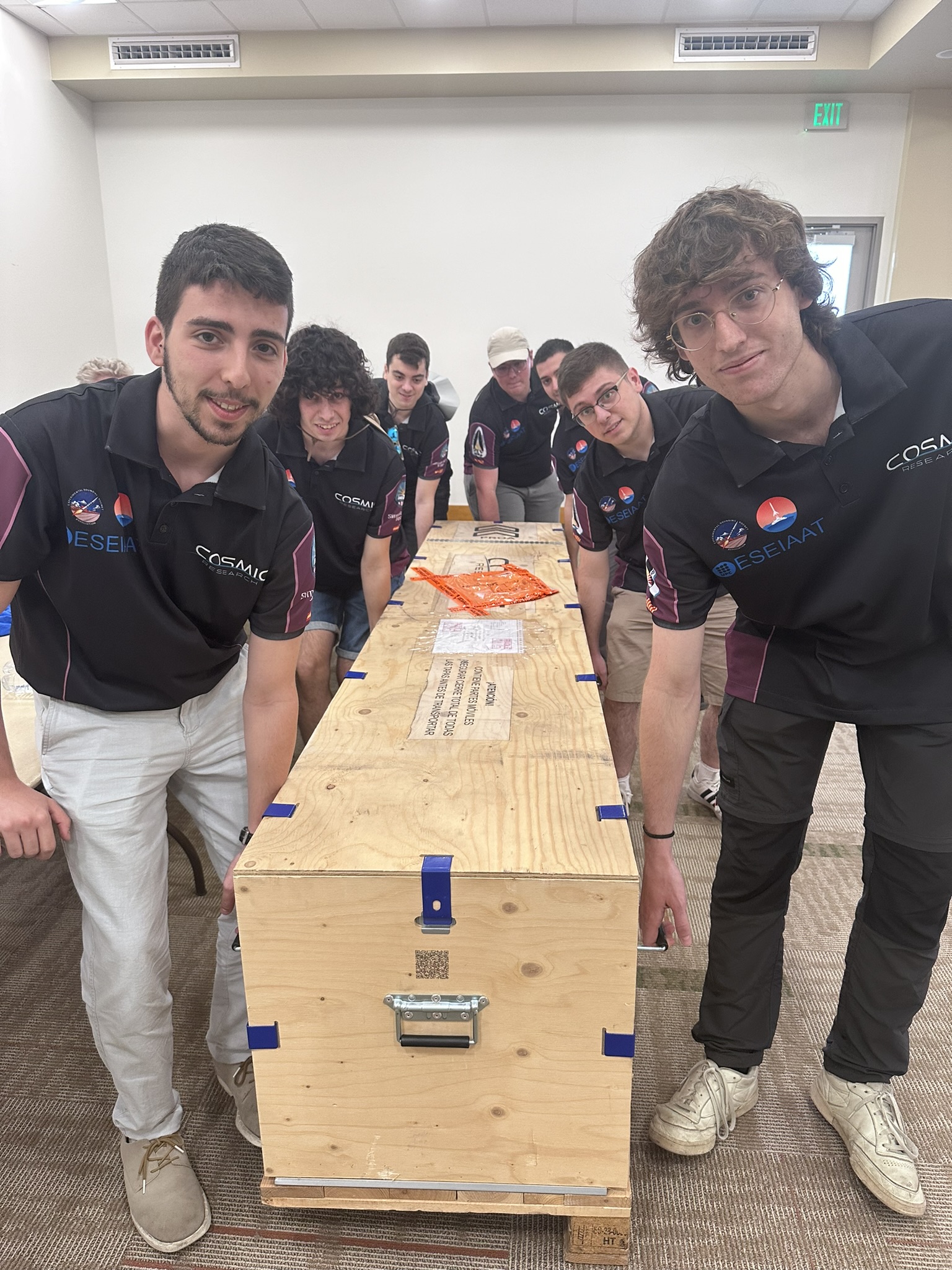
Finally, the team and Lucid had to travel to the United States, with all of its necessary permissions and certifications. For this purpose, the team paid its flights, the rocket and all the necessary equipment followed a specific process, and a place for the crate reception had to be found.
Launch Site: Spaceport America Vertical Launch Area
The Spaceport America Vertical Launch Area (32°56’24.7″N 106°55’14.0″W) is in the surroundings of Spaceport America, the first commercial spaceport in the world and an iconic place where companies like Virgin Galactic have their base. Here, the Experimental Sounding Rocket Association (ESRA) organizes on a yearly basis this competition.
Near this place, the White Sands Missile Range, a missile testing facility, and Los Alamos (the place where the first atomic bomb was developed) complements the experience. Due to the harsh conditions of the launch site a desert safety course was mandatory to be performed for the recovery team, as far as following strict hydration and sun-related safety measures.
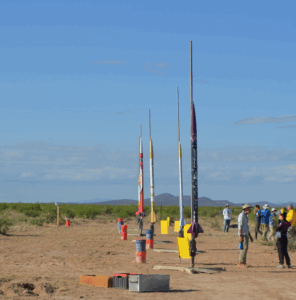
Countdown Operations
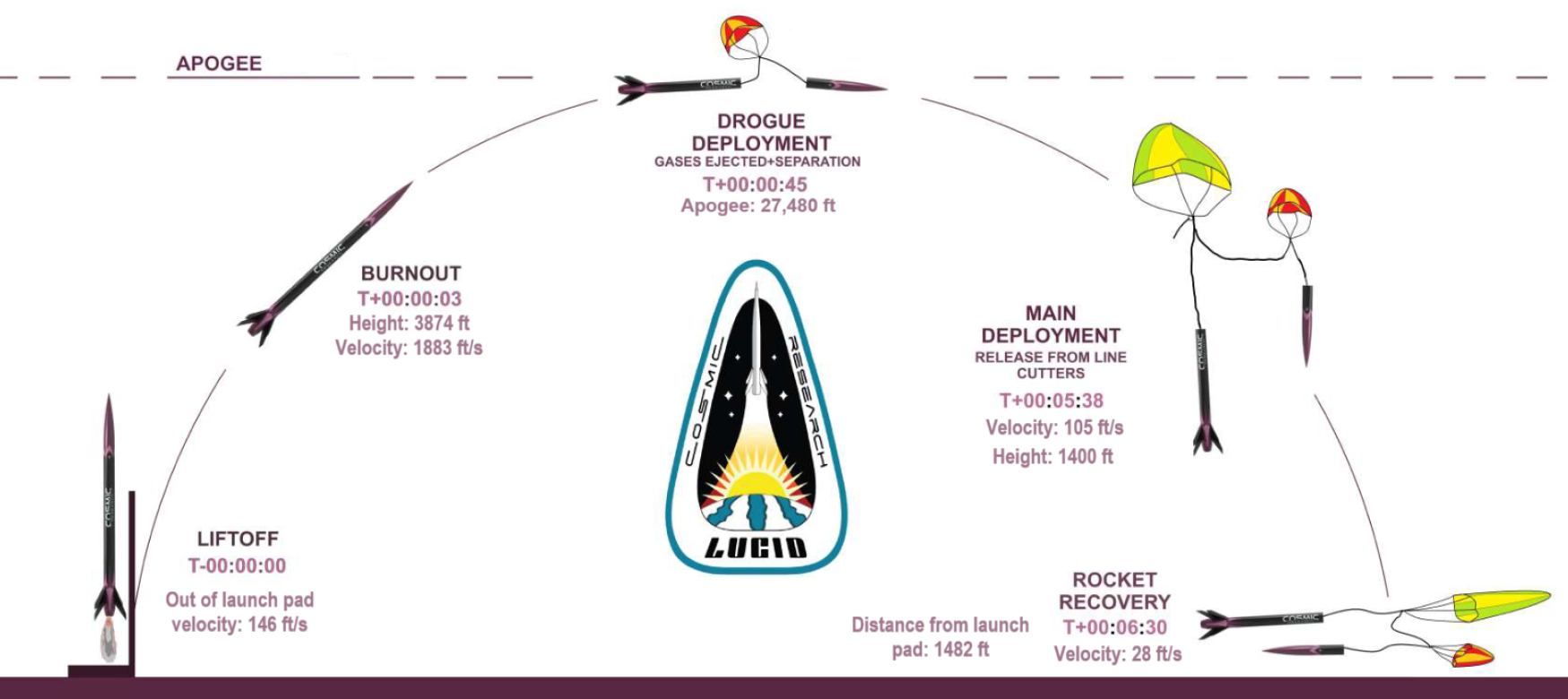
The launch was expected to be recovered in land. Also, due to competition requirements, a dual deployment system allowed the full rocket to be retrieved safely as far as minimizing its impact zone.
In less than a minute, the motor was expected to bring Lucid to its apogee, where its drogue chute opened and its descent began until the 1400 ft height, where the main chute opened. After 6 and a half minutes, the rocket was supposed to safely land and the team could go to its recovery at less than 500 meter distance from its launch point.
Mission Collaborators

Forat Engineering is a secondary-school team from Institut Forat del Vent at Cerdanyola del Vallès, which develop different satellite-related projects that later participate at CanSat competitions. They were encouraged to design the payload structure where all three experiments were mounted.
Josep Calatayud, known as Control de Misión, is a spanish content creator dedicated onto space news and events. Thanks to him, we were able to document and film our experience during the competition.
Special thanks to Brett Bachman, our mentor. He is an experienced Tripoli member who believed in our project and decided to willfully help us through a series of meetings and follow-ups during the development, as also coming with us during the competition.